Rest is more than stopping.
Rest can be difficult to make space for. There may always be something else to do, someone else who needs us, or a voice telling us that we should be doing something more productive.
But rest is part of being human.
It isn’t something we need to earn after we’ve done enough. Sometimes our bodies and minds simply need a pause.
Rest can take many forms. It might mean sleeping, sitting quietly, spending time outdoors, listening to music, doing something enjoyable, or simply allowing yourself to do less.
What feels restful can be different for everyone.
Notice what rest means for you
Take a moment to consider:
When do I feel most rested?
Perhaps you immediately think of sleep.
But there may be other forms of rest too.
You might feel restored after being outside, spending time with someone you trust, reading, making something, listening to music or having some time alone.
Notice what comes to mind without judging whether it is a “proper” form of rest.
A small experiment
Over the next few days, see if you can notice moments when your body is asking for a pause.
Perhaps you notice tiredness, heaviness, irritability, difficulty concentrating or simply a desire to stop.
Instead of immediately pushing through, experiment with asking:
What would feel supportive right now?
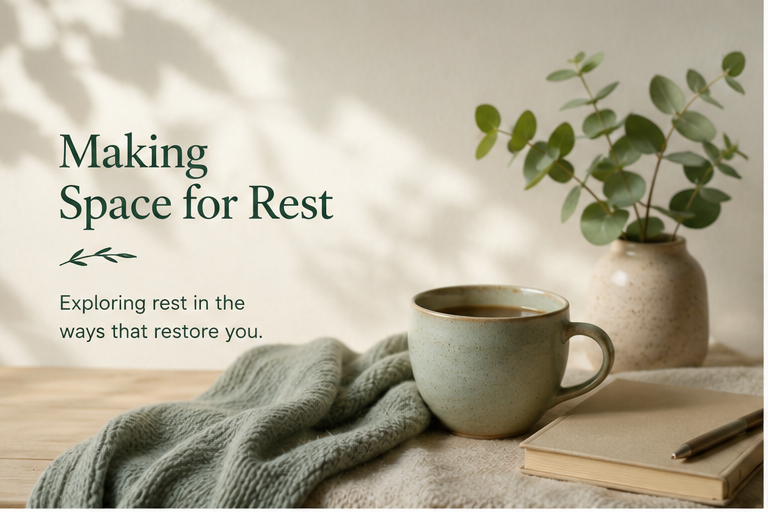
The answer might be five minutes with a cup of tea.
It might be going for a walk.
It might be doing nothing for a while.
Or it might be going to bed earlier.
There doesn’t have to be a perfect answer.
Reflection
- What does rest mean to me?
- Which kinds of rest feel genuinely restorative?
- Do I find it easy or difficult to allow myself to rest?
- What might make a little more space for rest possible?
Rest isn’t a reward for having done enough. Sometimes rest is what helps us continue.