Playfulness can feel surprisingly radical in adulthood.
As children, we usually have permission to explore simply because something is interesting, funny, beautiful or new. We experiment, imagine, make things up and follow our curiosity. We don’t necessarily need to know where we’re going. We discover as we go.
As adults, life can become much more purposeful. There are responsibilities to meet, things to get right and expectations to navigate. We can become so accustomed to being sensible, productive and in control that we lose touch with the part of us that simply wants to explore.
In Dance Movement Psychotherapy, playfulness can create a different kind of space. Movement doesn’t have to look a particular way or achieve anything. We can experiment with weight, space, rhythm and direction, allowing curiosity to take the lead rather than worrying about getting it right.
This can open up new possibilities. A movement can become an image, an image can become a story, and a story can reveal something we hadn’t consciously known before. Through the body and imagination, we can discover different ways of experiencing ourselves and the world around us.
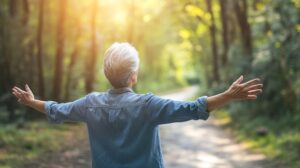
In this session, we were exploring qualities of movement drawn from Laban Movement Analysis, particularly weight, pathways and the ways movement can travel through and around the body. What emerged was a wonderfully playful journey into an imagined woodland — created entirely through movement.
The client later sent me this reflection about their experience.
These are their words, shared with permission.
Chinese Brush Painting
I am dancing. I imagine that each part of my body is a brush. Each time I move, I leave a brush
stroke on the canvas of my world. I can choose what sort of a stroke I make and what colour it is.
Some of the strokes are thick and heavy and dark. Some are light and airy and float away into the
distance. By bending my knees and straightening, I can use my hip to make a broad dark line which I
can continue with my shoulder and upper arm. It seems natural then to use my elbows and hands
and fingers to top what I realise is a tree with feathery foliage in the green of beech leaves in Spring.
I make short marks and long marks, straight lines and curves, spirals and fans. My whole body is
contributing. I realise that I’m creating a forest all around me. I paint in bluebells and ferns because
I can have all seasons at once in my imaginary forest. I add elderflower blossom to one of the trees
using my hair and a toss of my head. There are wild strawberries around my feet, their red berries
painted by my toes. I make wild raspberries using the tip of my nose and luscious blackberries with
my fingertips. A blackbird appears – not painted by me – and I realise my forest is beginning a life of
its own. I toss the blackbird a raspberry. He catches it neatly and rewards me with his song. His
song opens the door for other songs, other woodland sounds. I recognise a wren and I hear rustling
nearby that I just know is a hedgehog. The hum of insects appears in the background.
I step lightly through my imaginary forest, discovering wild and wonderful plants and trees,
accompanied by the sounds and occasional glimpses of all the creatures that have decided to
populate it.
I am entranced. I see a log in dappled sunlight and sit for a while, soaking up the beauty of this wondrous place.
I thank my body for dancing this place into being. I thank the universe for making it complete, making it whole. I know I will be back.